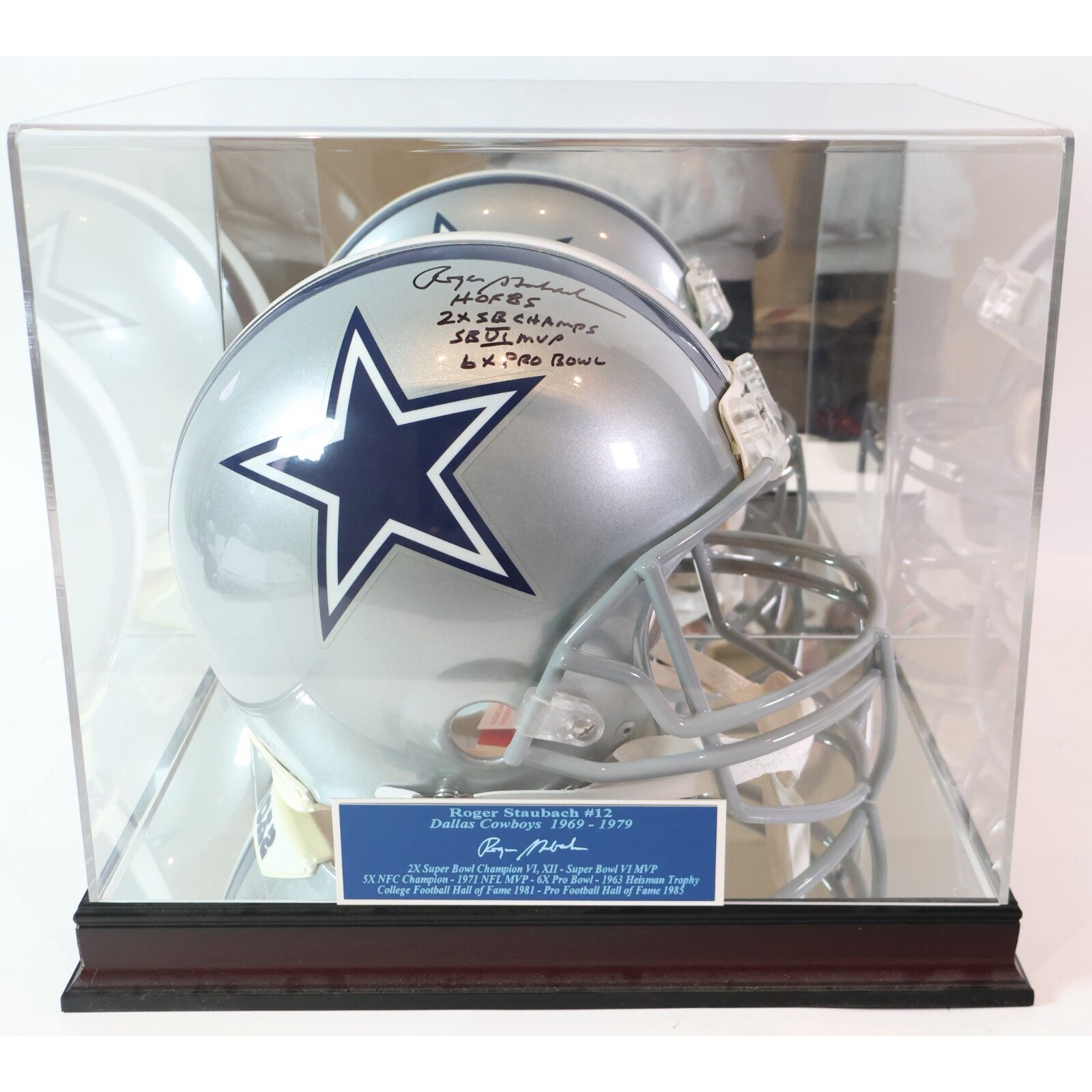
Who Is Roger Staubach?
Roger Staubach is a Hall of Fame quarterback who spent his entire 11-year NFL career with the Dallas Cowboys, leading them to five Super Bowl appearances and winning two, in Super Bowl VI and Super Bowl XII.[2][3] He combined efficient passing with notable rushing production, finishing with 22,700 passing yards, 153 touchdown passes, and 2,264 rushing yards.[2][3]
Staubach joined the Cowboys in 1969 after serving in the U.S. Navy and did not become the full-time starter until 1971, when he led Dallas on a 10-game winning streak and captured his first Super Bowl title and Super Bowl MVP honors.[2][3] He went on to earn six Pro Bowl selections, lead the NFL in passer rating four times, and retire with an 83.4 passer rating, the best in league history at that time.[1][3]
The Hail Mary and Clutch Quarterback Legacy
Staubach’s reputation was built on his ability to escape pressure and win late, earning him nicknames like “Roger the Dodger” and “Captain Comeback” as he engineered 23 game-winning drives in the fourth quarter and overtime.[2][5] His scrambling and calm under pressure became a template for dual-threat, clutch-focused evaluations of quarterbacks in later generations.[1][3]
His most iconic moment came in the 1975 NFC playoff game against the Minnesota Vikings, when he launched a late deep pass to Drew Pearson for a stunning touchdown and famously said he closed his eyes and said a “Hail Mary.”[2][5] The play popularized the term “Hail Mary” for last-second desperation passes, a phrase that remains standard in football commentary worldwide and keeps Staubach’s name present whenever teams attempt dramatic, long-shot comebacks.[5]
Awards, Rankings, and Modern Impact
Before reaching the NFL, Staubach starred at the U.S. Naval Academy, winning the Heisman Trophy and later becoming the first player ever to claim both the Heisman and a Super Bowl MVP award.[2] With the Cowboys, he led teams that reached six NFC championship games and helped define the franchise’s “America’s Team” era, building a winning identity still referenced in discussions of the team’s modern expectations.[2][3]
Inducted into the Pro Football Hall of Fame in 1985, Staubach continues to appear in all-time quarterback rankings, with modern analyses recognizing his efficiency, mobility, and success in a run-heavy era.[1][3] His leadership style, military background, and post-career business achievements are frequently cited as examples of how star quarterbacks can leverage on-field credibility into long-term influence, shaping how today’s athletes think about legacy beyond statistics alone.[2][4]