
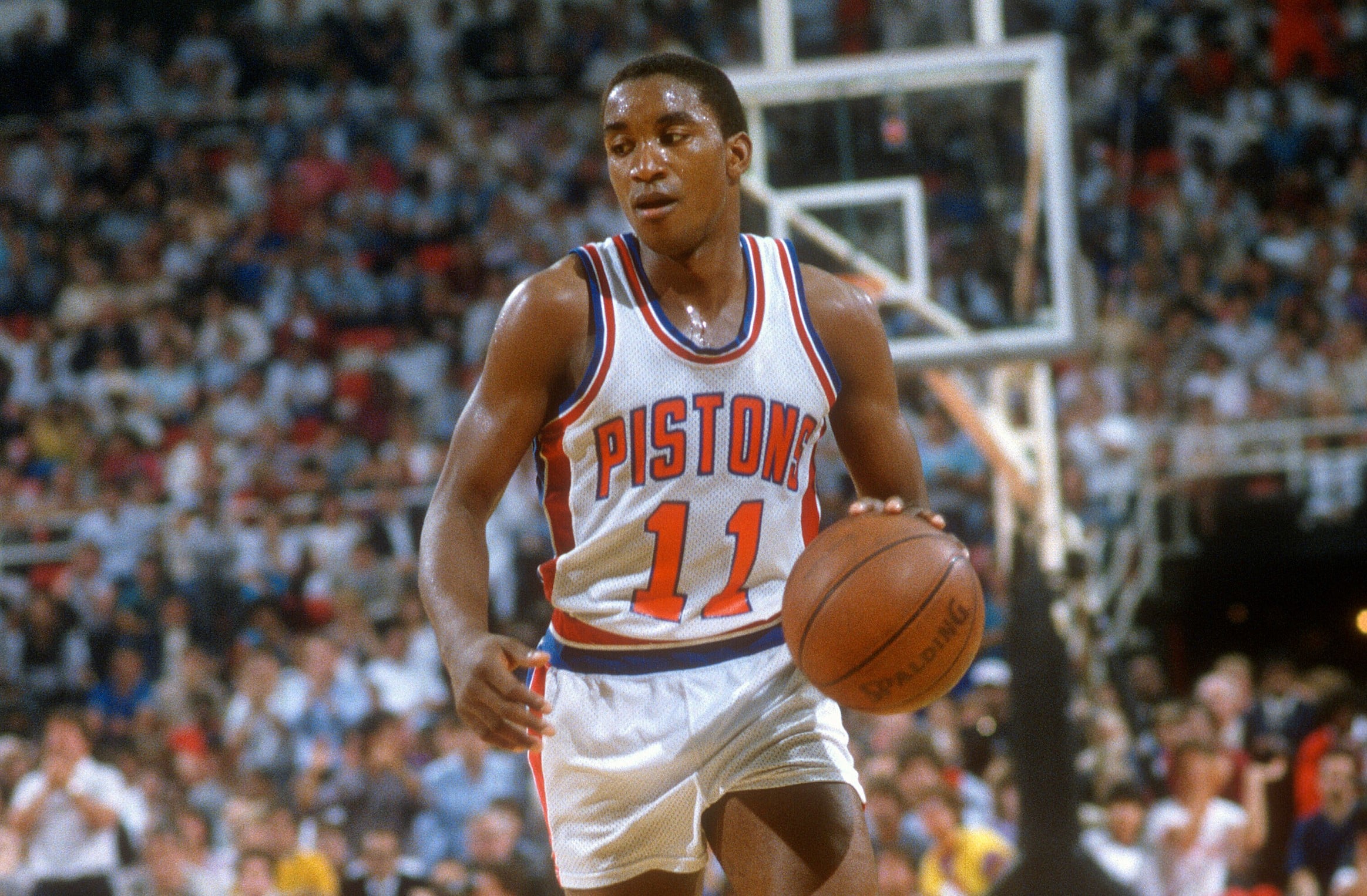
Who Is Isiah Thomas?
Isiah Thomas is a Hall of Fame point guard who starred for the Detroit Pistons from 1981 to 1994, leading the franchise to back-to-back NBA championships in 1989 and 1990. A 12-time All-Star, Finals MVP, and five-time All-NBA selection, he is widely considered one of the greatest point guards of all time.
Before reaching the NBA, Thomas led Indiana University to the 1981 NCAA championship and was named the Final Four’s Most Outstanding Player, cementing his reputation as an elite floor general and clutch performer. He went on to spend his entire professional career with Detroit, retiring as the club’s all-time leader in points, assists, and steals.
Inducted into the Naismith Memorial Basketball Hall of Fame in 2000 and named to both the NBA’s 50th and 75th Anniversary Teams, Thomas is now a staple of historical rankings and conversations about the league’s most influential players.
On-Court Impact and the Bad Boys Legacy
Thomas’s on-court impact is most closely tied to the Pistons’ “Bad Boys” era, a team known for its physical defense, deep roster, and us-against-the-world mentality. As the primary playmaker and emotional leader, he orchestrated an offense that could grind out low-scoring battles while still producing explosive scoring stretches when needed.
Despite standing around six feet tall, Thomas thrived in an era dominated by bigger guards and centers, averaging more than 19 points and 9 assists over his career. He became synonymous with toughness and clutch performance, highlighted by iconic moments like his 25-point third quarter on a severely sprained ankle in the 1988 NBA Finals.
That combination of leadership, resilience, and playmaking continues to shape how modern point guards are evaluated. Current stars who blend scoring and facilitating while leading emotionally charged locker rooms are often measured against the standard Thomas helped establish in Detroit.
Post-Playing Career and Today’s Relevance
After retiring in 1994, Thomas moved into coaching, broadcasting, and executive roles, including stints as head coach of the Indiana Pacers and New York Knicks and leadership positions in various basketball organizations. These roles, while sometimes controversial, kept him at the center of discussions about roster building, coaching philosophy, and organizational culture.
In media, Thomas appears as an analyst and commentator, offering perspective on point guard play, playoff pressure, and team leadership drawn from his own championship experiences. His insights surface regularly in debates about modern stars, making him a go-to voice when comparing eras or evaluating elite guards.
Because the NBA increasingly celebrates its history through documentaries, anniversary teams, and social content, Thomas’s highlights, rivalries, and quotes remain highly visible. Whenever conversations turn to the greatest point guards, toughest title runs, or defining playoff performances, Isiah Thomas’s name continues to trend and influence how fans and analysts understand the game.