What Raleigh Weather Means Today
Raleigh weather is the day‑to‑day mix of temperature, clouds, wind and precipitation that shapes how residents experience life across the Triangle. In December, that usually means chilly mornings, cool afternoons in the 50s°F, and a handful of rainy days spread through the month.
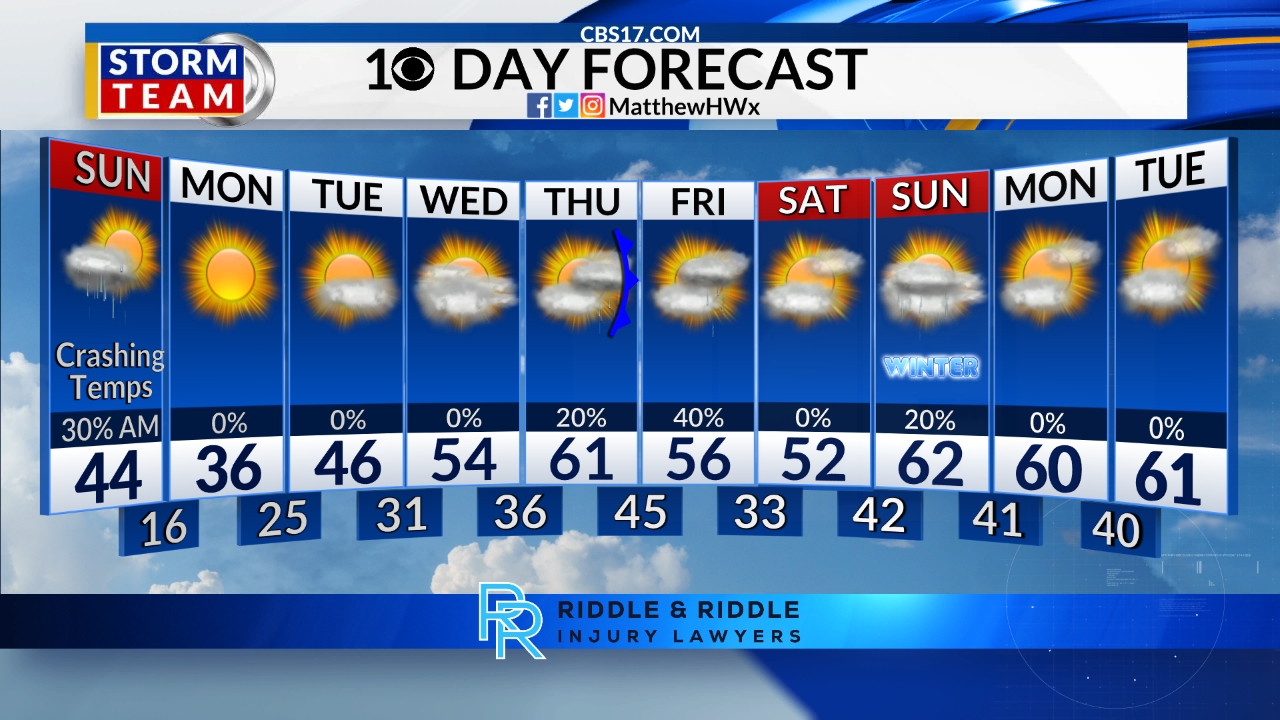
Today, however, a stronger push of cold air has moved into central North Carolina, and Raleigh’s temperatures are capped in the low‑to‑mid‑40s°F with a persistent northwest breeze. That combination is producing wind chills in the 30s during peak daytime hours and even lower values at sunrise and after sunset, making it feel much colder than a typical mid‑December day.[1][2][5]
Cold Snap and Local Impacts
Forecasts from national and local outlets show temperatures dropping quickly after dark, with lows sinking into the teens and lower 20s°F across Raleigh and surrounding suburbs.[1][2][5] The National Weather Service briefing calls out a period of bitter cold from Sunday night through early in the week, with occasional gusty winds up to 30–40 mph in the region that will drive wind chills into the single digits and teens.[2]
These conditions bring practical impacts: higher home heating demand, uncomfortable conditions for anyone spending long periods outdoors, and an elevated risk of cold‑related illness for unprotected individuals.[2] A hard freeze can also damage exposed pipes, sprinkler systems, and unprotected plants, so residents are urged to insulate plumbing, cover or move sensitive vegetation, and keep pets indoors overnight.[2][3]
Planning Ahead in Raleigh
Although the current cold snap is sharper than normal, it still fits within the broader pattern of Raleigh’s December climate, which features average temperatures around the mid‑40s°F and several cool, dry days between rain events.[3][4] Forecast guidance suggests a gradual warming trend later in the week, with highs trending back toward the 50s°F and nighttime lows moderating above the hard‑freeze range.[5][7]
For residents and travelers, the key is short‑term preparation: plan to dress in layers for morning and evening outings, allow extra time to warm up vehicles, and watch for any isolated icy patches where moisture lingers on shaded roads or bridges. Checking updated forecasts from the National Weather Service, major forecast providers, and local Raleigh outlets will help track when the cold relaxes and more typical early‑winter conditions return.[2][5][7]