
What Is a Northern Lights Aurora Borealis Forecast?
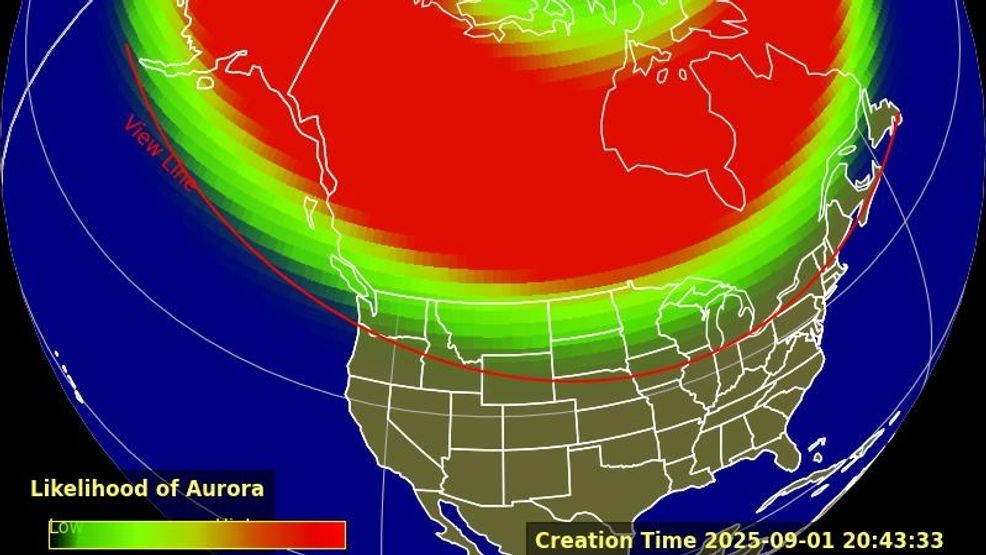
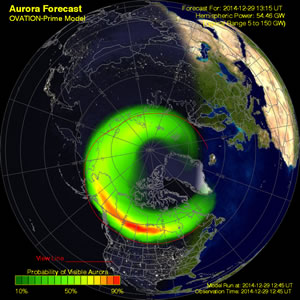
A northern lights aurora borealis forecast is a short‑term prediction of when and where auroral displays are likely to be visible, based on measurements of solar activity and Earth’s geomagnetic conditions.[2][4] These tools translate complex space‑weather data into simple maps and indices that show how strong the aurora might be and how far from the poles it could extend.
Aurora occurs when charged particles from the Sun collide with gases in Earth’s upper atmosphere along magnetic field lines, producing glowing arcs, curtains, and rays.[1][2] Because this process is driven by solar wind and magnetic disturbances, forecasters monitor the Sun’s output and near‑Earth space environment to anticipate periods of enhanced auroral activity.
How Today’s Aurora Conditions Are Predicted
Today’s aurora forecasts blend very short‑term nowcasts, often looking 15–30 minutes ahead, with multi‑day outlooks that estimate expected geomagnetic activity levels.[3][4][5] Real‑time dashboards use upstream solar wind measurements and current Kp values to show whether the aurora is likely to be quiet, active, or storm‑level in the near future.[3][4]
Agencies such as NOAA’s Space Weather Prediction Center publish 3‑hourly Kp forecasts and geomagnetic storm scales, while regional services like the Geophysical Institute in Alaska summarize conditions as low, moderate, or high auroral activity for specific latitude bands.[2][4][5] During the current active phase of the solar cycle, these forecasts are especially important because strong disturbances can rapidly expand the auroral oval and create brief windows of visibility at lower latitudes.
Where and When You Can See the Aurora
Under typical conditions, the brightest aurora is seen in a high‑latitude ring known as the auroral oval, covering interior Alaska, northern Canada, southern Greenland, Iceland, northern Scandinavia, and northern Siberia.[1][2] Forecast maps show this oval shifting and expanding as geomagnetic activity increases, indicating which regions have the highest probability of overhead displays.
Forecast providers emphasize that clear, dark skies are just as important as geomagnetic activity when planning to see the northern lights.[2][3] The best viewing window is usually the three to four hours around local midnight, away from city lights and with minimal cloud cover, and staying in the auroral zone for several nights greatly improves the chances of catching an active display.[2][3]