Breakdown of Elon Musk's Wealth Sources
Musk's fortune is dominated by his ownership in key companies. He holds about 42% of SpaceX, valued at $400 billion following a private tender offer in August 2025, up from $350 billion the prior year. Tesla remains a major contributor, though its 6% stock decline recently shaved $15 billion from his net worth.
xAI and X also play roles, with xAI Holdings' valuation more than doubling since its March 2025 formation by merging xAI and X. These ventures highlight Musk's pivot toward AI and social media amid Tesla's EV market challenges.
Government contracts bolster SpaceX, with $20 billion in U.S. federal deals as of late 2024, enhancing its stability despite private status.
Recent Developments and Volatility
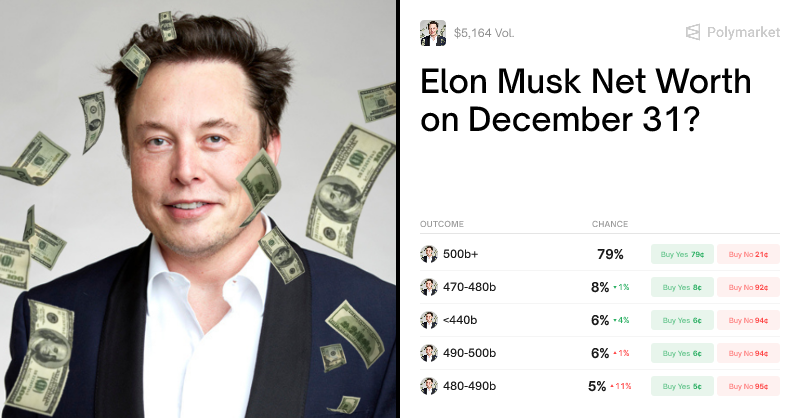
In December 2024, Musk first hit $400 billion, accelerating post-U.S. election to over $386 billion before a $126 billion drop by March 2025 amid backlash over Trump ties. Recovery led to $500 billion by October 2025.
December 2025 sees him at $483 billion, down from peaks but still leading Forbes' list. A November 2025 Tesla pay package, potentially worth $1 trillion over 10 years if goals are met, signals future growth.
Briefly overtaken by Larry Ellison in September 2025, Musk reclaimed the top spot, demonstrating resilience amid market shifts.
Historical Milestones of Musk's Fortune
Musk's wealth journey began with $175.8 million from PayPal's 2002 sale to eBay. He entered Forbes' Billionaires List in 2012 at $2 billion, surging to $300 billion in 2021 as Tesla stock boomed.
By 2020, his net worth jumped from $27 billion to $77 billion. He first became the richest in 2021, holding the spot intermittently through 2025 despite volatilities like 2022's Twitter acquisition.
Tax records show minimal federal payments in some years, with a $12 billion bill estimated for 2021 from stock sales, reflecting his 'cash poor' stance despite massive equity wealth.