Why Is It the Shortest Day?
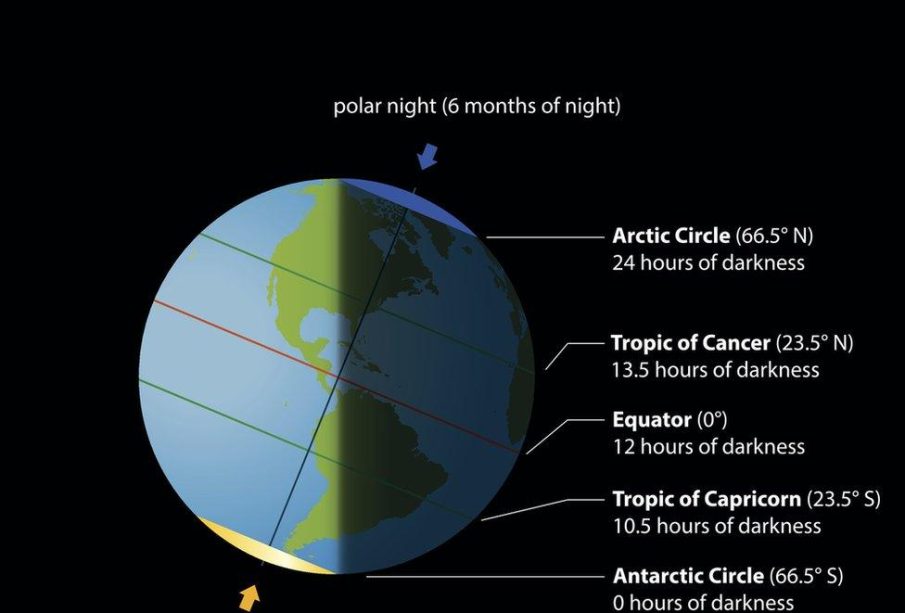
Earth's axial tilt of 23.4 degrees causes seasonal variations in daylight. In winter, the Northern Hemisphere tilts away from the Sun, reducing the Sun's sky arc and shortening days. The solstice peaks this tilt, with the Sun directly over the Tropic of Capricorn at 23.5 degrees south latitude.
This positioning means polar regions face continuous darkness, while mid-latitudes like the US and Europe see dramatically reduced sunlight. For instance, the solstice moment aligns globally at the same instant, though local day lengths vary by latitude—shortest near the poles, longer toward the equator.
Post-solstice, the tilt shifts, gradually increasing daylight. By the spring equinox, days and nights equalize at about 12 hours each, peaking at the June summer solstice.
2025 Winter Solstice Details
The 2025 event hits on December 21 at 10:03 AM EST, confirming it as the year's shortest day across the Northern Hemisphere. In the US, expect minimal daylight, varying from under 4 hours in northern Alaska to around 9-10 hours in southern states.
Astronomical winter begins here, distinct from meteorological winter starting December 1. Coldest days often follow weeks later due to thermal lag, even as sunlight returns. Globally, this solstice coincides with summer in the Southern Hemisphere.
Current trends include solstice-themed events like night hikes and observatory viewings, emphasizing nature's quiet beauty amid shorter days.
Celebrations and Impacts
Winter solstice inspires festivals worldwide, from ancient Yule logs to modern light displays. Historically tied to December 25 under the Julian calendar, it influenced Christmas timing. Today, communities host hikes, planetarium shows, and sunrise watches.
Impacts extend to mood and energy, with shorter days prompting seasonal affective disorder awareness in the US and Europe. Positively, it marks renewal—days lengthening post-solstice boosts winter optimism.
In 2025, leverage long nights for stargazing or reflection. Events like those at observatories highlight planetary views, blending science with tradition.