
Political Background and Rise to Power
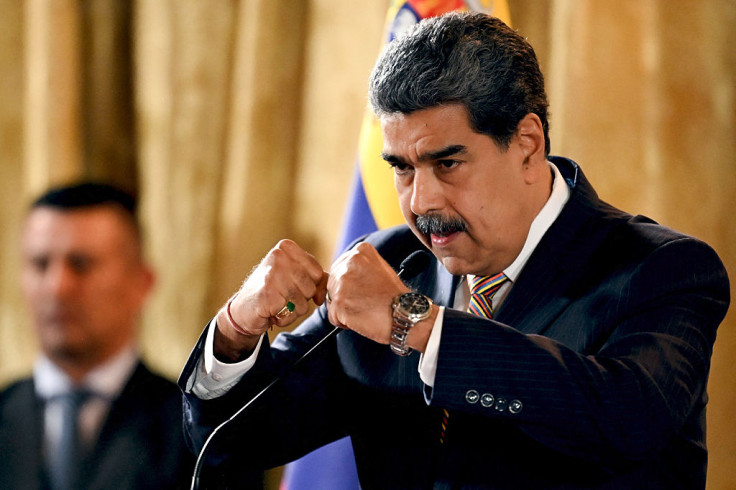
Nicolás Maduro assumed the Venezuelan presidency following Hugo Chávez's death on March 5, 2013. As Chávez died within the first four years of his term, the Venezuelan Constitution required a presidential election within 30 days. Maduro was unanimously chosen as the Socialist Party's candidate and won the special election on April 14, 2013, with 50.62% of the vote, narrowly defeating opposition candidate Henrique Capriles by just 1.5%. He was inaugurated on April 19, 2013, after the election commission promised a full audit of results.
Beginning in late 2013, Maduro was granted decree powers by the Venezuelan legislature to address the country's economic crisis. These powers were extended multiple times, and since January 2016, the Supreme Tribunal has continued to grant him authority to rule by decree. The opposition has strongly condemned these actions, claiming that the legislature's constitutional powers were usurped by the court. This concentration of executive authority has characterized Maduro's presidency throughout his tenure.
The Contested 2024 Election and Political Crisis
In 2024, Maduro ran for a third consecutive term in a presidential election that became highly controversial. The Maduro-aligned National Electoral Council claimed he won the election but failed to provide detailed vote tallies or evidence to support the claim. Opposition groups independently gathered vote counts that showed opposition candidate Edmundo González had won the most votes, contradicting the official results. This discrepancy sparked widespread international criticism and accusations that Maduro had stolen the election.
Despite the disputed results and international pressure, Maduro was sworn in for his third term on January 10, 2025. The United States Department of State and numerous international observers have refused to recognize the legitimacy of the election, characterizing it as a 'sham electoral system' used to maintain an unlawful presidency. The crisis has resulted in significant political upheaval, with opposition leader María Corina Machado calling for large-scale international protests for peace and freedom across more than 80 cities in around 20 countries.
US Relations and Terrorist Designation
On November 24, 2025, the Trump administration officially designated Nicolás Maduro and his government allies as members of a foreign terrorist organization. This designation provides the US with legal authority to impose stronger sanctions on Venezuela's government and has justified increased military operations in the region. The US has been conducting strikes on vessels allegedly carrying drugs from Venezuela through the Caribbean Sea toward the United States, resulting in dozens of deaths.
In response to these designations and military pressure, Maduro has publicly stated that Venezuela poses no threat to the United States and characterized US actions as illegal imperialist aggression. He has emphasized that Venezuela serves as a guarantee of security throughout the American continent. The situation has escalated into the largest US military buildup in the region since the 1989 invasion of Panama, with approximately 15,000 troops positioned near Venezuelan waters alongside significant military assets.