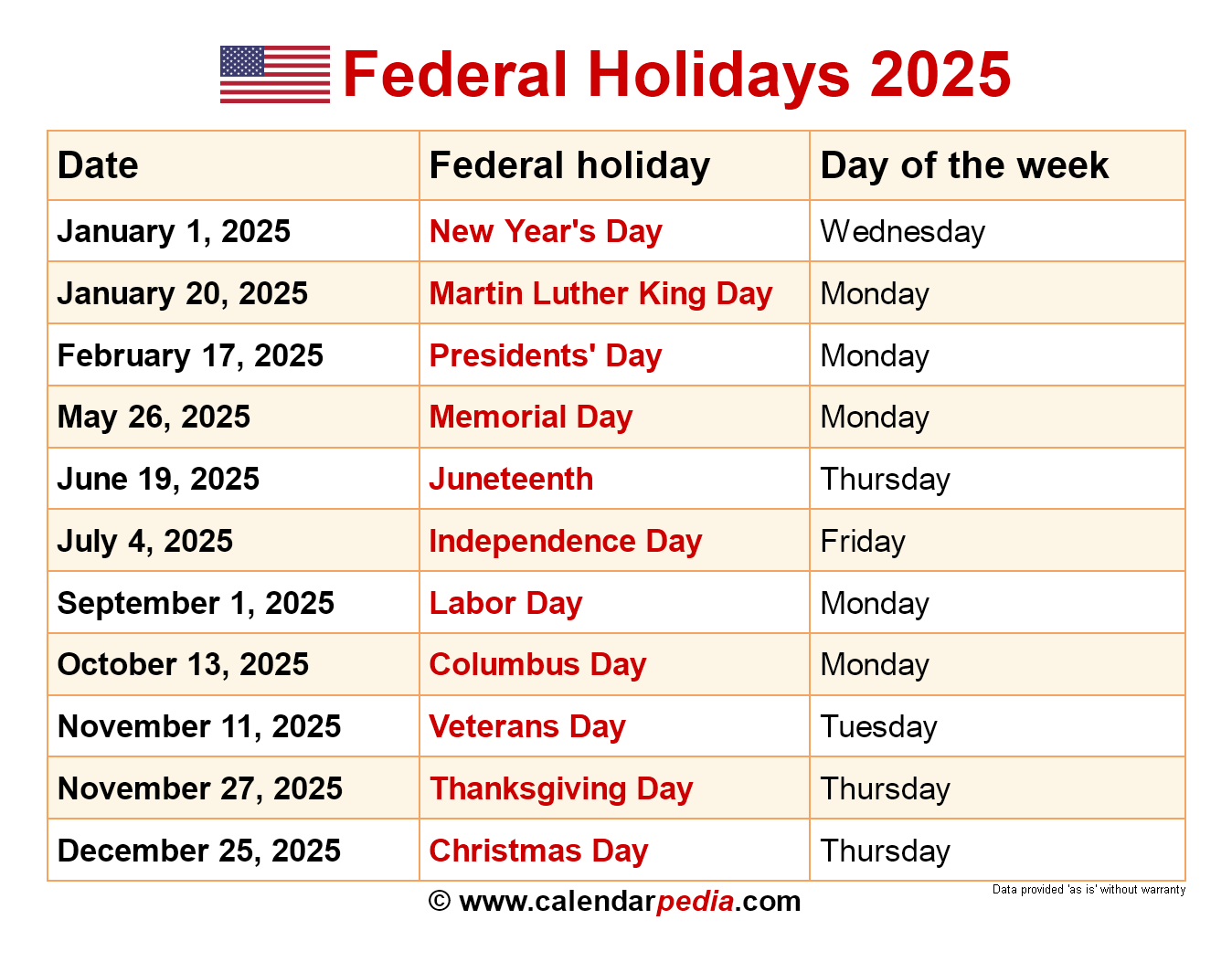
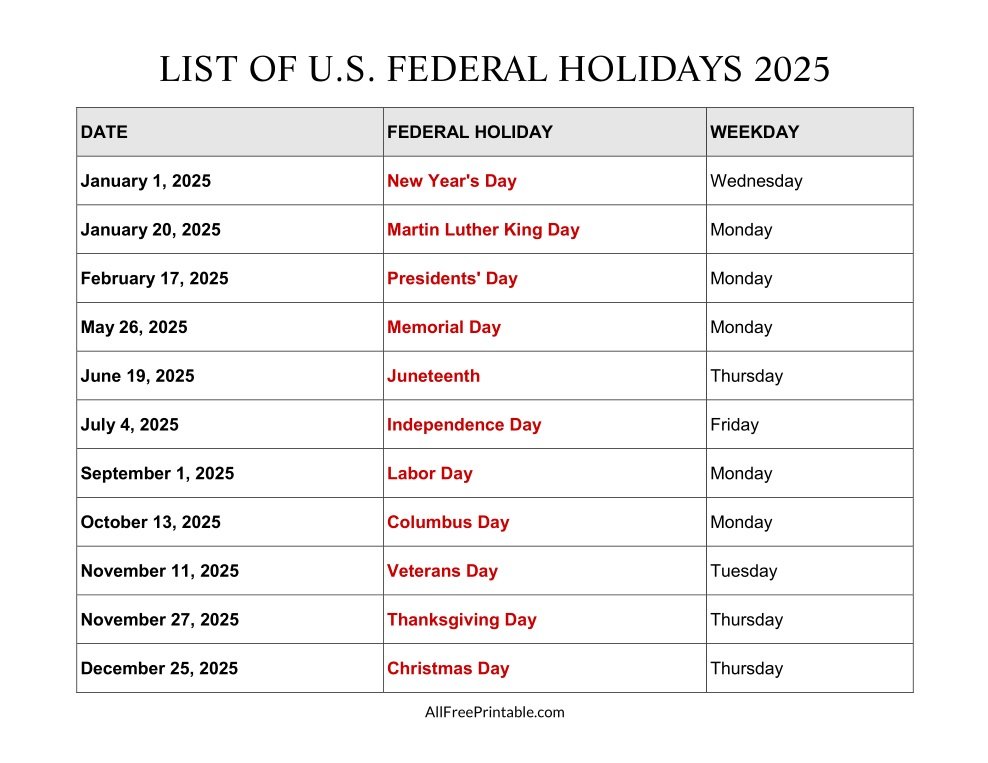
What are the U.S. federal holidays in 2025?
Federal holidays 2025 are the 11 official U.S. government holidays created by federal law, during which most federal offices close and eligible employees receive paid leave. These holidays are widely used as a reference calendar by schools, banks, and many private employers across the country.
In 2025, the federal holidays are: New Year’s Day (January 1), Birthday of Martin Luther King, Jr. (January 20), Washington’s Birthday/Presidents Day (February 17), Memorial Day (May 26), Juneteenth National Independence Day (June 19), Independence Day (July 4), Labor Day (September 1), Columbus Day/Indigenous Peoples’ Day (October 13), Veterans Day (November 11), Thanksgiving Day (November 27), and Christmas Day (December 25).[2][3][8]
How 2025 federal holidays affect work and business
For employees, the 2025 federal holiday schedule strongly influences paid time off, overtime eligibility, and how to plan vacations. Many employers mirror the federal list when deciding office closures, especially in sectors such as banking, finance, and professional services, making these dates critical for scheduling projects and client work.[1][2][6]
Businesses use the 2025 holiday calendar to manage staffing, shift coverage, and customer demand. Banks and Federal Reserve services observe the core federal holiday set, which can delay payments, wire transfers, and other financial transactions; as a result, finance and accounting teams often work backward from holiday dates when setting billing cycles and due dates.[1][3][6]
Planning long weekends and major observances in 2025
Several 2025 federal holidays fall on Mondays or Fridays, creating valuable three-day weekends. Memorial Day on Monday, May 26, Labor Day on Monday, September 1, Columbus Day on Monday, October 13, and Independence Day on Friday, July 4, are prime opportunities for domestic travel, family reunions, and major leisure activities.[1][2][8]
Beyond time off, the holidays highlight key civic and cultural themes throughout the year. Martin Luther King Jr. Day emphasizes civil rights and community service; Memorial Day focuses on honoring fallen service members; Juneteenth marks emancipation from slavery; and Veterans Day and Thanksgiving frame national conversations about service, gratitude, and community.[5][7][10]