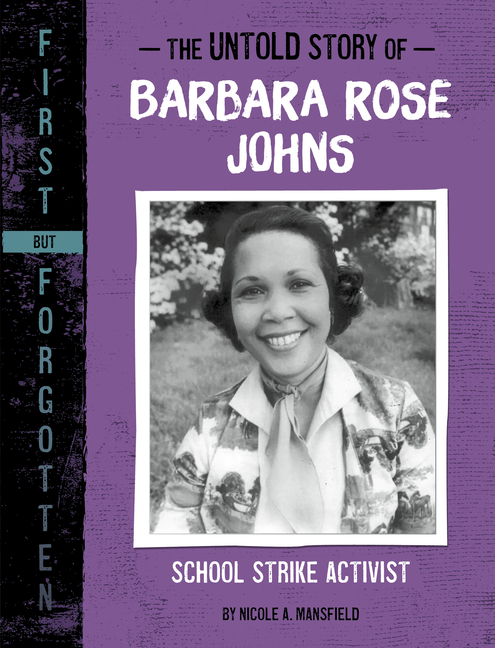
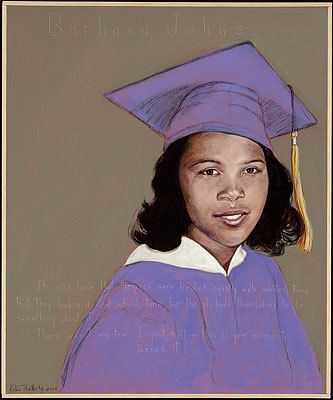
Who Was Barbara Rose Johns?
Barbara Rose Johns was a Black American civil rights activist who, at just 16 years old, led a student strike against segregated and inadequate conditions at R.R. Moton High School in Farmville, Virginia, in April 1951.[3][5] Born in 1935 and raised partly in Prince Edward County, she saw firsthand how Black students were crowded into poorly built, underfunded facilities while white students attended a modern, well-equipped school.[1][3]
Instead of accepting the status quo, Johns quietly organized classmates, planned a surprise school assembly, and delivered a speech calling for a walkout until they received fair treatment.[2][3][5] Her bold move turned local frustration into organized protest and drew the attention of the NAACP, setting the stage for a case that would become part of the landmark Supreme Court decision ending legal segregation in public schools.[2][3][4]
From Student Strike to Brown v. Board of Education
The Moton High School strike led by Barbara Rose Johns resulted in the lawsuit Davis v. County School Board of Prince Edward County, filed with the support of NAACP attorneys who insisted the students challenge segregation itself, not just poor facilities.[2][4][5] It became one of five cases consolidated into Brown v. Board of Education, in which the U.S. Supreme Court ruled in 1954 that segregated public schools were unconstitutional.[3][4]
Johns’s activism had immediate personal consequences: white supremacists targeted her family, and the Ku Klux Klan burned a cross on their property, prompting her parents to send her to Montgomery, Alabama, for safety.[2][3] She later completed her education, married William Powell, earned a degree in library science from Drexel University, and worked for years as a school librarian in the Philadelphia public schools, continuing her quiet commitment to education until her death in 1991.[1][3][5]
Legacy and Today’s Impact
For many years, Barbara Rose Johns’s contributions were overshadowed in national narratives of the civil rights movement, even though hers was the only student-initiated case that fed into Brown v. Board.[2][3][5] Historians and educators now emphasize that her actions demonstrate the central role of young people in challenging Jim Crow and reshaping public education, making her an important figure in classroom discussions about civic engagement and youth leadership.[2][5]
In recent decades, Virginia and national institutions have elevated her story through monuments, building dedications, and museum exhibits, including renaming the Virginia Attorney General’s building in her honor and erecting a monument to her and the Moton students at Capitol Square in Richmond.[1][4] As debates continue over whose statues belong in public spaces and how to teach U.S. history, Johns’s growing recognition symbolizes a broader shift toward honoring Black women and youth whose activism helped dismantle segregation and expand democratic rights.[3][4][5]